

FRENCH HILL
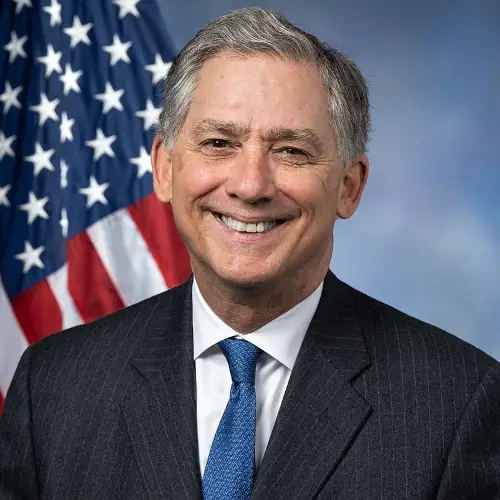
Biography of Congressman French Hill
James French Hill, born December 5, 1956, in Little Rock, Arkansas, is a longtime banker, entrepreneur, and public servant who has represented Arkansas’s 2nd Congressional District in the U.S. House of Representatives since 2015. A ninth‑generation Arkansan, Hill built a career that blends deep financial expertise with a commitment to public service, culminating in his leadership roles on the U.S. House Committee on Financial Services. (Source)
Hill’s early career included service on the staff of U.S. Senator John Tower and work for the U.S. Senate Committee on Banking, Housing, and Urban Affairs from 1982 to 1984. He later served in the administration of President George H. W. Bush, gaining experience in economic policy and international finance. (Source)
Before entering Congress, Hill founded and served as Chairman and CEO of Delta Trust & Banking Corporation, an Arkansas‑based financial institution. His leadership in the private sector established him as a respected voice on banking regulation, financial integrity, and community‑focused economic development. (Source)
Service on the House Committee on Financial Services
Hill’s tenure in Congress has been defined by his influential work on the House Committee on Financial Services. In the 119th Congress, he serves as Chairman of the full committee, following his previous roles as Vice Chairman and as Chairman of the Subcommittee on Digital Assets, Financial Technology, and Artificial Intelligence. (Source)
In these roles, Hill has been a leading advocate for modernizing the regulatory framework governing digital assets, strengthening the stability of the U.S. banking system, and ensuring that financial innovation does not compromise consumer protection or market integrity. His work reflects a balance between fostering innovation and maintaining strong oversight—an approach shaped by decades of experience in banking and public policy.
When a bank crosses the line, the public pays
People trust banks with their money, their business, and their future. In return, the law expects banks to act with honesty, care, and good faith. When a bank instead uses its power to bully small business owners, twist legal processes, or hide its tracks, that is not just bad behavior. It is a warning sign that something is broken deep inside the institution.
Reverse Domain Name Hijacking, or RDNH, is one of those warning signs. It happens when a powerful party tries to misuse the domain name dispute system to take a domain it does not deserve. When a bank is found guilty of RDNH, it means a neutral panel decided the bank abused the process in “bad faith”. That is not a clerical error. It is an abuse of process that raises serious fiduciary and regulatory concerns.
The banking public deserves to know what that means, why it matters, and what Congressman Hill can do about it.
Why abuse of process by a bank is a red flag
Banks are not ordinary companies. They are heavily regulated fiduciaries. Their officers and directors have legal duties under federal and state banking laws. They must act with loyalty, prudence, and integrity. They must avoid unsafe or unsound practices. They must respect the law in every decision, including litigation and intellectual property disputes.
So when a bank is found to have abused a legal process like the UDRP to grab a domain name, it is not just a private dispute. It shows the bank was willing to misrepresent facts, stretch the truth, or weaponize procedure to get something it wanted. That is the opposite of good faith. It is a form of predatory behavior.
Regulators look at patterns. A bank that cuts corners in one area may cut corners in others. If executives sign off on a strategy that involves bad faith, intimidation, or destruction of evidence, that is a governance failure. It suggests a culture where winning matters more than the law. That is exactly what federal and state banking rules are designed to prevent.
Congressman Hill, when will you do your duty as chair of the House Committee on Financial Services to hold “bad faith” bankers accountable and protect the banking system for all Arkansans and Americans?
The legal duties banks cannot ignore
Federal law gives regulators strong tools to deal with bank misconduct. Agencies like the Office of the Comptroller of the Currency, the Federal Reserve, and the FDIC can investigate, impose civil money penalties, and even remove officers and directors. They can act when a bank violates laws, engages in unsafe or unsound practices, or breaches fiduciary duties.
State banking departments add another layer of oversight. They enforce state laws against fraud, bad faith, and deceptive or abusive practices. Many states also have strict rules on record retention and prohibitions on destroying evidence. When a bank engages in intimidation, harassment, or defamation of small business owners, those facts can trigger state as well as federal concern.
In plain language, bank leaders do not get to hide behind the logo. Officers, directors, and the chair of the board can be held personally accountable to the maximum extent allowed by law. When they approve or tolerate abusive tactics, they put themselves and the institution at risk.
Public officials have a fiduciary duty
This is not only about banks. It is also about the people elected to protect the public. Governors, attorneys general, state legislators, and members of Congress all have a duty to protect their constituents from unethical financial practices. They oversee the laws that govern banks. They appoint or influence the regulators who enforce those laws.
When a bank engages in predatory tactics against small business owners, public officials cannot look away. Their job is not to shield powerful institutions from scrutiny. Their job is to ensure that the rules are enforced fairly and transparently. If they fail to act when confronted with clear evidence of abuse, they are failing you.
The people have every right to demand that your representatives treat bank misconduct as a serious threat to the integrity of the financial system and to the health of the local economy.
Congressman Hill, you have spoken publicly about the importance of combating financial fraud(Source). You must now live up to your words and hold a dishonest bank in your home state accountable.
Why small business owners are especially vulnerable
Small business owners often operate on thin margins. A domain name can be central to their brand, their search visibility, and their customer trust. When a bank tries to seize that domain through RDNH or similar tactics, it is not just a technical dispute. It is an attack on the business’s identity and livelihood.
Add intimidation, defamation, or harassment to the mix, and the power imbalance becomes obvious. A bank has in‑house lawyers, outside counsel, and deep pockets. A small business owner may have none of that. That is why the law expects banks to act with extra care. When they instead act like predators, they undermine public confidence in the entire banking system.
If you let that go unchallenged, you send a message that power wins and rules do not matter. That is not the kind of economy you want to live in.
What must happen now: investigation, transparency, accountability
When a bank is found guilty of Reverse Domain Name Hijacking or similar abuse, the response cannot be a shrug. There must be an immediate, formal, and transparent investigation. Regulators should review the facts, examine internal decision‑making, and determine the extent the officers or directors violated their duties. Congressman Hill, the time is now for you to step up as the people’s champion against “bad faith” bankers.
Consequences for the bankers’ actions must follow. That can include civil money penalties, restrictions on activities, or removal from office. It can also include referrals to law enforcement where appropriate. The goal is not vengeance. The goal is to restore integrity, deter future misconduct, and protect the public.
Transparency is essential. The public should know when a bank has been found to engage in bad faith or abuse of process. Small business owners should not have to guess which institutions respect the law and which ones treat it as a tool to be bent. Sunlight is a powerful disinfectant.
Congressman Hill, do you believe it is acceptable for a regulated bank to abuse legal processes to target small businesses? What safeguards will you put in place? This issue is a matter of rule of law and community protection.
A politician who is willing to lead this fight
Real change often starts when one public official decides to take a stand. Imagine a leader who treats bank misconduct not as a niche issue but as a core question of fairness and trust. Will you stand up for the people Congressman Hill?
A public voice is needed
Every major reform in financial regulation has started with public pressure. People got angry, got informed, and refused to accept that “this is just how it works.” The people can do the same here.
If we care about fair markets, honest banking, and the survival of small businesses, now is the time to act. Share stories of abuse when they are documented. Support officials who demand investigations. Question those who stay silent.
Most of all, remember this: a bank that abuses legal processes, intimidates small business owners, or destroys evidence is not just bending the rules. It is attacking the foundation of trust that the entire system depends on. Everyone, including Congressmen, have both the right and the responsibility to demand better.