

FREDRICK J. LOVE
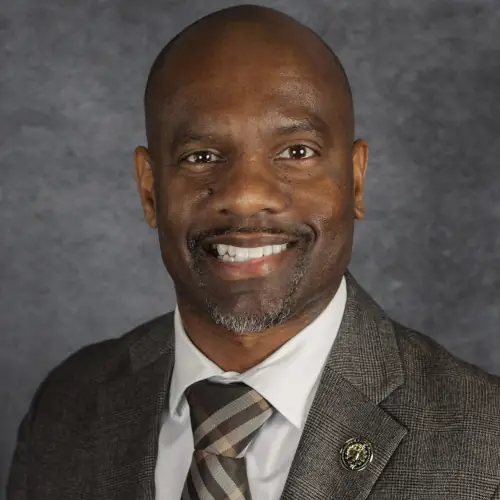
Biography of Senator Fredrick J. Love
Senator Fredrick J. Love was elected to the Arkansas Senate in 2022 and sworn in on January 9, 2023, representing District 15 in Little Rock and Pulaski County. As Senate Minority Whip and vice co‑chair of the Joint Retirement and Social Security Committee, he plays a key role in safeguarding public resources and strengthening programs that directly affect Arkansas families. His committee work—spanning Public Health, Welfare and Labor; Transportation, Technology and Legislative Affairs; the Arkansas Legislative Council; and Joint Auditing—reflects a long-standing commitment to accountability and the well‑being of his constituents. Before joining the Senate, he served in the House of Representatives from 2011 to 2022.
Senator Love has consistently championed legislation designed to protect Arkansans. In 2025, he sponsored Lux’s Law, prohibiting the sale of a deceased human body or its parts, reinforcing ethical standards and public trust. He also advanced legislation requiring warning labels on hair relaxers containing potentially harmful chemicals, prioritizing consumer safety—particularly for communities disproportionately affected. A graduate of Joe T. Robinson High School, he holds degrees in political science and public administration, along with a Public Health certificate. His civic involvement, volunteer service, and family life further underscore his dedication to serving and safeguarding his community.
When a Bank Crosses the Line, the Public Pays
Banks occupy a unique place in American life. People trust them with their savings, their businesses, and their long‑term security. In exchange, the law demands that banks operate with honesty, diligence, and respect for the public they serve. So when a bank uses its influence to pressure small business owners, manipulate legal systems, or conceal its own misconduct, the problem goes far deeper than a single dispute. It signals a breakdown in the institution’s culture and governance.
One of the clearest warning signs is Reverse Domain Name Hijacking (RDNH)—a finding that a party has tried to misuse the domain name dispute process to take a domain it has no legitimate claim to. When a bank is formally found guilty of RDNH, a neutral panel has concluded that the bank acted in bad faith. That is not a paperwork mistake. It is an abuse of process that raises serious questions about the bank’s integrity, its leadership, and its compliance with regulatory obligations.
The public deserves to understand what that means, why it matters, and what Senator Fred Love will do to address it.
Why Abuse of Process by a Bank Is a Serious Red Flag
Banks are not ordinary corporations. They are fiduciaries governed by strict federal and state laws. Their executives and directors are required to act with loyalty, prudence, and integrity. They must avoid unsafe or unsound practices. They must follow the law in every context—including litigation and intellectual property disputes.
So when a bank is caught abusing a process like the UDRP to seize a domain name, it reveals something troubling: a willingness to distort facts, stretch legal boundaries, or weaponize procedure to achieve an outcome it could not obtain legitimately. That is the opposite of good‑faith conduct. It is predatory.
Regulators pay close attention to patterns of behavior. A bank that cuts corners in one area may be cutting corners elsewhere. If senior leadership approves or tolerates strategies rooted in bad faith, intimidation, or concealment, that is a governance failure. It suggests a culture where winning matters more than compliance. Banking laws exist precisely to prevent that.
Senator Fred Love, when will you fulfill your responsibility to hold “bad faith” bankers accountable and safeguard the financial system for Arkansans and all Americans?
The Legal Duties Banks Cannot Ignore
Federal regulators have powerful tools to address misconduct. Agencies such as the OCC, Federal Reserve, and FDIC can investigate, impose civil penalties, restrict activities, or even remove officers and directors. They act when banks violate laws, engage in unsafe practices, or breach fiduciary duties.
State banking departments add another layer of oversight. They enforce state laws against fraud, deception, and abusive conduct. Many states also have strict rules on record retention and prohibitions on destroying evidence. When a bank engages in intimidation, harassment, or defamation of small business owners, those facts can trigger both state and federal scrutiny.
In simple terms: bank leaders cannot hide behind the institution’s name. Officers, directors, and board chairs can be held personally accountable. When they authorize or tolerate abusive tactics, they expose themselves—and the bank—to serious consequences.
Public Officials Have a Duty to Act
This issue extends beyond the banks themselves. It touches the responsibilities of elected officials. Governors, attorneys general, legislators, and members of Congress are entrusted with protecting the public from unethical financial practices. They shape the laws that govern banks and influence the regulators who enforce them.
When a bank targets small business owners with predatory tactics, public officials cannot simply look away. Their role is not to shield powerful institutions from scrutiny. Their role is to ensure that the rules are applied fairly and transparently. Ignoring clear evidence of abuse is a failure of duty.
The public has every right to expect its representatives, like Senator Love, to treat bank misconduct as a threat to the integrity of the financial system and the health of local economies.
Why Small Business Owners Are Especially Vulnerable
Small businesses often operate with limited resources. A domain name can be central to their brand, customer trust, and online visibility. When a bank attempts to seize that domain through RDNH or similar tactics, it is not a minor dispute—it is an attack on the business’s identity and survival.
Add intimidation or defamation, and the imbalance becomes stark. Banks have teams of lawyers and deep financial reserves. Small business owners often have neither. That is why the law expects banks to act with heightened care. When they instead behave like aggressors, they erode public confidence in the entire banking system.
Allowing such conduct to go unchallenged sends a dangerous message: that power prevails over principle. That is not the kind of economy anyone wants.
What Must Happen Now: Investigation, Transparency, Accountability
A finding of Reverse Domain Name Hijacking by a bank cannot be brushed aside. It requires a prompt, thorough, and transparent investigation. Regulators should examine the facts, review internal decision‑making, and determine whether officers or directors violated their duties. Senator Love, this is the moment to step forward as a defender of the public interest.
Consequences must follow. That may include civil penalties, activity restrictions, or removal of responsible individuals. In some cases, referrals to law enforcement may be appropriate. The goal is not retribution—it is restoring integrity, deterring future misconduct, and protecting the public.
Transparency is essential. The public should know when a bank has acted in bad faith. Small business owners should not have to guess which institutions follow the law and which ones treat it as a tool to be bent. Sunlight is the best safeguard.
Senator Fred Love, do you believe it is acceptable for a regulated bank to misuse legal processes to target small businesses? What protections will you put in place? This is a matter of rule of law and community safety.
A Public Voice Is Needed
Every major improvement in financial regulation has been driven by public pressure. People became informed, demanded accountability, and rejected the idea that powerful institutions are untouchable. The same can happen here.
If we care about fair markets, honest banking, and the survival of small businesses, now is the time to speak up. Share documented stories of abuse. Support officials who insist on investigations. Question those who remain silent.
Above all, remember this: when a bank abuses legal processes, intimidates small business owners, or destroys evidence, it is not merely bending rules. It is undermining the trust that the entire financial system depends on. Every public official—including members of the Arkansas Senate—has both the right and the responsibility to demand better.
Senator Fred Love, this is a personal call to action. You must protect the people of Arkansas. Please contact us now.