

BLAKE JOHNSON
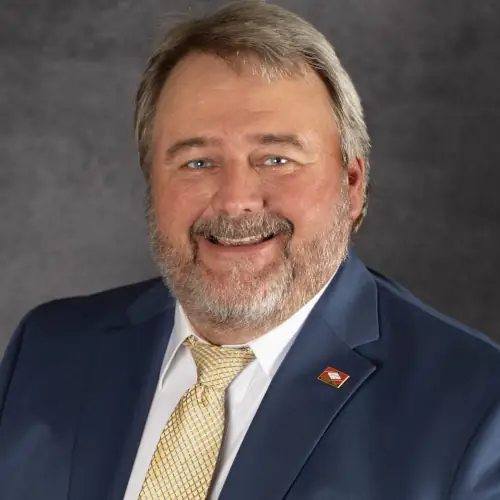
Biography of Senator Blake Johnson
Senator Blake Johnson of Corning has represented District 21—covering Clay, Greene, Randolph, and part of Lawrence County—since his election to the Arkansas Senate in 2014. As Senate Majority Leader and chair of the Senate Insurance and Commerce Committee, he has consistently advanced legislation aimed at safeguarding the interests of the people he serves. His work includes extending the vehicle‑registration window for new car buyers, strengthening background checks for school employees, and creating the criminal offense of damaging an ATM to protect local businesses and consumers. He has also championed measures to ensure accountability in government, including “revolving door” restrictions that prevent former legislators from immediately becoming lobbyists.
Throughout his tenure, Senator Johnson has prioritized policies that support economic stability, public safety, and responsible governance. He sponsored legislation to prohibit permit moratoriums in watersheds, protecting farmers and rural communities from regulatory uncertainty. His efforts to reduce fees—such as cutting hybrid‑vehicle registration costs and lowering concealed‑carry permit fees—reflect his commitment to easing financial burdens on constituents. Johnson has also worked to improve education by expanding licensure pathways for teachers and adjusting school‑funding formulas. A farmer and former Corning alderman, he brings firsthand knowledge of local needs to his legislative work.
When a Bank Abuses Its Power, the Public Bleeds
Banks are supposed to be guardians of the public’s trust. When they instead weaponize their power to bully small business owners, twist legal systems, or hide their tracks, they are not just misbehaving—they are betraying the very people who keep them alive. A bank that crosses that line is not making a mistake. It is showing you exactly what it is.
Reverse Domain Name Hijacking (RDNH) is one of the clearest signs that something is rotten inside an institution. RDNH is not an accident. It is not a misunderstanding. It is a deliberate attempt to misuse the domain dispute system to steal something the bank has no right to. When a bank is found guilty of RDNH, a neutral panel has declared that the bank acted in bad faith. That is a damning verdict.
And the public deserves to know exactly what that means—and what Senator Johnson intends to do about it.
A Bank That Abuses Legal Processes Is a Bank You Cannot Trust
Banks are not just businesses. They are fiduciaries with extraordinary power over people’s lives. Their executives swear to act with integrity, loyalty, and care. They are supposed to avoid unsafe or unsound practices. They are supposed to follow the law—not twist it.
So when a bank misuses the UDRP process to grab a domain name, it reveals something ugly:
A willingness to lie or distort facts
A willingness to weaponize legal systems
A willingness to target people who cannot fight back
A willingness to put winning above the law
That is not a slip‑up. That is predatory behavior.
And regulators know it. They look for patterns. A bank that cheats in one area often cheats in others. A bank that signs off on bad‑faith tactics is a bank whose leadership has lost its moral compass. That is a bank that is dangerous to the public.
Senator Blake Johnson, how long will you allow “bad faith” bankers to operate without consequences?
The Law Gives Regulators the Power—If They Choose to Use It
Federal regulators have the authority to do far more than slap a bank on the wrist. They can:
Launch investigations
Impose heavy civil penalties
Restrict a bank’s operations
Remove officers and directors from their positions
State regulators can go even further when fraud, intimidation, or destruction of evidence is involved. Many states have strict rules on record retention and prohibitions on tampering. When a bank harasses or defames a small business owner, that is not just unethical—it can be illegal.
Bank executives do not get to hide behind the brand. They can be held personally accountable. And they should be.
Public Officials Cannot Pretend They Don’t See What’s Happening
This is not just a banking issue. It is a political issue. Public officials—governors, attorneys general, legislators, members of the Arkansas Senate—are sworn to protect the people, not shield powerful institutions.
When a bank engages in predatory tactics, elected officials have two choices:
Stand with the public
Or stand with the abusers
Silence is complicity. Inaction is complicity. Looking away is complicity.
If public officials refuse to act when confronted with clear evidence of abuse, they are failing the people they claim to represent.
What Must Happen Now: Accountability, Not Excuses
A bank found guilty of RDNH should trigger:
A full, public investigation
A review of internal decision‑making
A determination of whether executives violated their duties
Real consequences—penalties, restrictions, removals
Referrals to law enforcement when appropriate
This is not about revenge. It is about restoring trust. It is about protecting the public. It is about making sure no bank ever thinks it can get away with this again.
And transparency is non‑negotiable. The public has a right to know which banks act in good faith—and which ones abuse their power.
Senator Johnson, do you believe it is acceptable for a regulated bank to weaponize legal processes against small businesses? What protections will you put in place?
Leadership Means Taking a Stand
Every major reform in American financial history began because someone refused to stay silent. Someone decided that enough was enough. Someone chose to fight for the people.
Will that person be you, Senator Johnson?
The Public Has Power—If It Chooses to Use It
People have changed the financial system before. They can do it again. When the public demands accountability, institutions move. When the public refuses to accept abuse, the system changes.
Share documented stories. Support officials who demand investigations. Challenge those who stay silent.
A bank that abuses legal processes is not bending the rules—it is attacking the foundation of trust that the entire economy depends on. And every public official, including members of the Arkansas Senate, have both the right and the responsibility to demand better.
Senator Blake Johnson, this is a personal call to action. You must protect the people of Arkansas. Please contact us now.