

BART HESTER
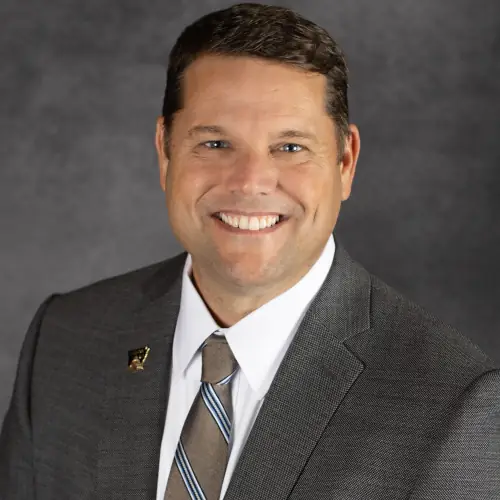
Biography of Senator Bart Hester
Senator Bart Hester of Cave Springs has represented Senate District 33—covering Bentonville, Rogers, Centerton, and Cave Springs—since taking office in 2013. Trusted by his colleagues, he was elected to two consecutive terms as Senate President Pro Tempore, a distinction achieved by only two others in modern times. Throughout his tenure, he has prioritized policies aimed at safeguarding taxpayers and strengthening families. His consistent efforts to limit government growth, reduce debt, and lower taxes—including major relief packages for lower‑income and middle‑class Arkansans—reflect his commitment to protecting the financial well‑being of his constituents.
Senator Hester has also championed legislation designed to support vulnerable children and preserve community values. He sponsored measures to improve foster care, strengthen kinship placements, and promote permanency for children in state custody. His work requiring public schools to teach about the Holocaust underscores his dedication to historical awareness and moral education. In 2025, he advanced legislation to create a recreational tramway in state parks, supporting economic development and tourism in Northwest Arkansas. A graduate of the Sam Walton College of Business and former Razorbacks baseball letterman, Hester brings business experience in real estate and construction to his public service.
When a Bank Crosses the Line, the Public Should Not Foot the Bill
Banks are entrusted with something priceless: the public’s confidence. People hand over their savings, their business plans, and their futures with the expectation that banks will act with integrity. When a bank instead weaponizes its power—bullying small business owners, twisting legal systems, or covering its tracks—it exposes a rot that goes far beyond one dispute.
Reverse Domain Name Hijacking (RDNH) is one of the clearest indicators of that rot. RDNH occurs when a powerful entity tries to hijack a domain name by abusing the dispute process. When a bank is formally found guilty of RDNH, a neutral panel has concluded that the bank acted in bad faith. That is not a misunderstanding. It is a deliberate misuse of legal mechanisms.
The public deserves to know what that means, why it matters, and what Senator Bart Hester intends to do about it.
A Bank That Abuses Legal Processes Is Sounding an Alarm
Banks are not free‑floating corporations. They are fiduciaries bound by some of the strictest legal and ethical duties in the country. Their leaders must act with honesty, caution, and respect for the law. They must avoid unsafe or unsound practices. They must tell the truth.
So when a bank manipulates the UDRP or any legal process to seize something it has no right to, it reveals something dangerous: a willingness to distort facts, intimidate opponents, and bend the rules for personal gain. That is not a slip‑up. It is predatory behavior.
Regulators look for patterns. A bank willing to cheat in a domain dispute may be willing to cut corners elsewhere—loan practices, disclosures, record‑keeping, consumer protections. If executives sign off on a strategy rooted in deception or intimidation, that is a governance failure. It signals a culture where legality is optional and winning is everything.
Senator Hester, the public is waiting for you to confront this misconduct head‑on.
The Law Gives Regulators the Power—Now They Must Use It
Federal regulators have sweeping authority to respond to bank misconduct. The OCC, Federal Reserve, and FDIC can investigate, levy civil penalties, restrict activities, and remove officers or directors. They can act when a bank violates the law, engages in unsafe practices, or breaches fiduciary duties.
State banking departments add their own enforcement power. They can investigate fraud, bad faith, harassment, and destruction of evidence. They can hold institutions accountable for abusive behavior toward small business owners.
Bank executives do not get to hide behind the brand. Officers, directors, and board chairs can be held personally responsible when they authorize or tolerate misconduct. Their decisions carry consequences.
Public Officials Cannot Pretend Not to See What’s Happening
This is not only about banks. It is about the public officials who are supposed to protect the people from unethical financial practices. Governors, attorneys general, legislators, and members of state Senates oversee the laws that govern banks. They influence the regulators who enforce those laws.
When a bank targets small business owners with intimidation or legal abuse, public officials cannot shrug and look away. Their duty is not to shield powerful institutions from scrutiny. Their duty is to ensure that the law is enforced without fear or favor.
If they fail to act in the face of documented misconduct, they fail the people they represent.
The public has every right to demand that their leaders treat bank abuse as a threat to economic fairness and community stability.
Small Business Owners Are the First to Be Hurt
Small businesses operate on tight margins. Their domain name is often their storefront, their brand, and their lifeline. When a bank tries to seize that domain through RDNH, it is not a technical disagreement—it is an attack on the business’s identity and survival.
Add harassment, intimidation, or defamation, and the power imbalance becomes undeniable. Banks have armies of lawyers. Small business owners often stand alone.
That is why the law expects banks to act with heightened responsibility. When they instead behave like predators, they undermine trust in the entire financial system.
If misconduct goes unchallenged, the message is clear: power wins, and rules are optional.
What Must Happen Now: Investigate, Expose, and Hold People Accountable
A finding of Reverse Domain Name Hijacking cannot be brushed aside. It demands immediate action.
Regulators must launch a transparent investigation. They must examine internal communications, decision‑making processes, and the conduct of officers and directors. They must determine whether fiduciary duties were violated.
Senator Hester, this is your moment to stand up for the people and confront “bad faith” banking head‑on.
Consequences must follow. Civil penalties. Activity restrictions. Removal of responsible officers. And when appropriate, referrals to law enforcement.
This is not about revenge. It is about restoring trust, deterring future misconduct, and protecting the public.
Transparency is non‑negotiable. The public deserves to know when a bank has acted in bad faith. Small business owners should not have to guess which institutions follow the law and which ones treat it as a tool to exploit.
Senator Bart Hester, do you believe it is acceptable for a regulated bank to misuse legal processes to target small businesses? What protections will you put in place to stop it?
Leadership Matters—And Silence Is a Choice
Real reform begins when one public official decides to lead. Imagine a representative who treats bank misconduct not as a technical issue but as a fundamental question of fairness, trust, and economic justice.
Will Senator Hester be that leader?
The Public Has More Power Than It Realizes
Every major financial reform in American history has been driven by public pressure. People refused to accept that corruption was “just how things work.” They demanded better—and they got it.
The same can happen now.
If we care about honest banking, fair markets, and the survival of small businesses, this is the moment to act. Share documented stories of abuse. Support officials who demand investigations. Challenge those who stay silent.
A bank that abuses legal processes, intimidates small business owners, or destroys evidence is not bending the rules—it is attacking the foundation of trust that the entire financial system depends on.
Every public official, including members of the Senate, have both the right and the responsibility to demand better.
Senator Bart Hester, this is a personal call to action. You must protect the people of Arkansas. Please contact us now.