

BEN GILMORE
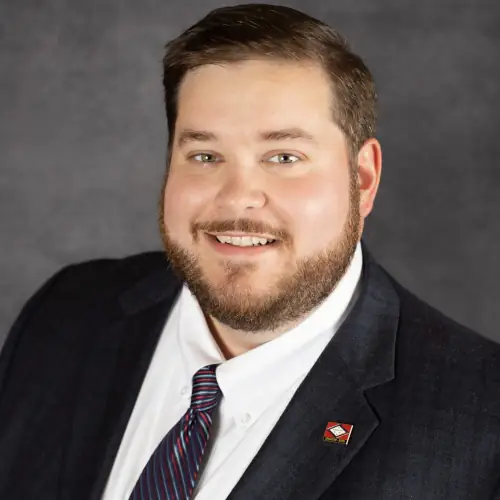
Biography of Senator Ben Gilmore
Senator Ben Gilmore was elected to the Arkansas Senate in 2020 and represents District 1, covering eight counties across southeast Arkansas. His colleagues quickly recognized his leadership, selecting him as Senate co‑chair of the Arkansas Legislative Council and chair of the Senate Interim Committee on Children and Youth. Through service on key committees—including Judiciary, Agriculture, Forestry and Economic Development, and Joint Budget—he has consistently focused on safeguarding families, strengthening local industries, and ensuring responsible stewardship of public resources.
Senator Gilmore has championed legislation designed to protect Arkansans’ safety, financial stability, and long‑term wellbeing. He led efforts to create a more sustainable property‑insurance system for public schools and higher‑education institutions, helping shield communities from rising costs. His work to reduce recidivism, combat organized retail crime, and reform the criminal justice system—including sponsoring the Protect Arkansas Act—demonstrated a commitment to safer neighborhoods. He has targeted fentanyl trafficking to protect children, repealed the burdensome Throwback Tax to save businesses millions, and advanced policies supporting forestry, agriculture, and economic growth. Throughout his career—from public service roles to community outreach—Senator Gilmore has prioritized the needs of his constituents and worked to strengthen the region he calls home.
When a Bank Abuses Its Power, the Public Should Not Be the Victim
Banks are supposed to be guardians of trust. They hold our savings, finance our businesses, and shape our economic future. But when a bank chooses to weaponize its influence—harassing small business owners, twisting legal systems, or burying evidence—it exposes something far more dangerous than a single bad decision. It reveals a culture that has lost its moral compass.
Reverse Domain Name Hijacking (RDNH) is one of the clearest signs of that moral collapse. RDNH occurs when a powerful institution tries to steal a domain name by misusing the dispute process. When a bank is officially found guilty of RDNH, it means an independent panel concluded the bank acted in bad faith. That is not a clerical mistake. It is a deliberate abuse of a legal system designed to protect fairness.
The public deserves to understand the gravity of that finding—and what Seantor Ben Gilmore intends to do about it.
A Bank Willing to Manipulate the Law Is a Bank That Cannot Be Trusted
Banks operate under some of the strictest fiduciary duties in the country. They are required to act with honesty, caution, and respect for the law. Their leaders are expected to uphold the highest standards of conduct.
So when a bank misuses the UDRP or any legal process to seize something it has no right to, it is not a harmless misstep. It is a calculated decision to distort facts, intimidate opponents, and exploit the legal system for personal gain. That is the behavior of an institution that believes it is above accountability.
Regulators know that misconduct rarely exists in isolation. A bank willing to cheat in a domain dispute may be cutting corners in lending, compliance, disclosures, or record‑keeping. If executives approve or tolerate strategies rooted in deception, that is a governance failure. It signals a culture where legality is optional and ethics are disposable.
Seantor Gilmore, the public is watching to see whether you will confront this misconduct or ignore it.
The Law Gives Regulators the Tools—Now They Must Use Them
Federal regulators have broad authority to respond to bank misconduct. Agencies like the OCC, Federal Reserve, and FDIC can:
Investigate wrongdoing
Impose civil money penalties
Restrict a bank’s activities
Remove officers and directors
They can act when a bank violates the law, engages in unsafe practices, or breaches fiduciary duties.
State banking regulators add their own enforcement power. They can investigate fraud, bad faith, harassment, and destruction of evidence. They can hold institutions accountable for abusive behavior toward small business owners.
Bank executives cannot hide behind the corporate logo. Officers, directors, and board chairs can be held personally responsible when they authorize or tolerate misconduct.
Public Officials Cannot Pretend This Is Someone Else’s Problem
This is not just a banking issue. It is a public‑trust issue.
Elected officials—governors, attorneys general, legislators, and members of the Arkansas Senate—are responsible for protecting the public from unethical financial practices. They oversee the laws that govern banks. They influence the regulators who enforce those laws.
When a bank targets small business owners with intimidation or legal abuse, public officials cannot look away. Their duty is not to shield powerful institutions from scrutiny. Their duty is to ensure that the law is enforced fairly and transparently.
If they fail to act in the face of documented misconduct, they fail the people they represent.
The public has every right to demand that their leaders treat bank abuse as a threat to economic fairness and community stability.
Small Business Owners Are the First to Be Harmed
Small businesses often operate with limited resources. Their domain name is their storefront, their brand, and their lifeline. When a bank tries to seize that domain through RDNH, it is not a technical disagreement—it is an attack on the business’s identity and survival.
Add harassment, intimidation, or defamation, and the power imbalance becomes undeniable. Banks have armies of lawyers. Small business owners often stand alone.
That is why the law expects banks to act with heightened responsibility. When they instead behave like predators, they undermine trust in the entire financial system.
If misconduct goes unchallenged, the message is clear: power wins, and rules are optional.
What Must Happen Now: Investigate, Expose, and Hold People Accountable
A finding of Reverse Domain Name Hijacking cannot be brushed aside. It demands immediate action.
Regulators must launch a transparent investigation. They must examine internal communications, decision‑making processes, and the conduct of officers and directors. They must determine whether fiduciary duties were violated.
Senator Gilmore, this is your moment to stand up for the Arkansas public and confront “bad faith” banking head‑on.
Consequences must follow. Civil penalties. Activity restrictions. Removal of responsible officers. And when appropriate, referrals to law enforcement.
This is not about revenge. It is about restoring trust, deterring future misconduct, and protecting the public.
Transparency is non‑negotiable. The public deserves to know when a bank has acted in bad faith. Small business owners should not have to guess which institutions follow the law and which ones treat it as a tool to exploit.
Senator Ben Gilmore, do you believe it is acceptable for a regulated bank to misuse legal processes to target small businesses? What protections will you put in place to stop it?
Leadership Matters—And Silence Is a Choice
Real reform begins when one public official decides to lead. Imagine a representative who treats bank misconduct not as a technical issue but as a fundamental question of fairness, trust, and economic justice.
Will Senator Gilmore be that leader for Arkansas?
The Public Has More Power Than It Realizes
Every major financial reform in American history has been driven by public pressure. People refused to accept that corruption was “just how things work.” They demanded better—and they got it.
The same can happen now.
If we care about honest banking, fair markets, and the survival of small businesses, this is the moment to act. Share documented stories of abuse. Support officials who demand investigations. Challenge those who stay silent.
A bank that abuses legal processes, intimidates small business owners, or destroys evidence is not bending the rules—it is attacking the foundation of trust that the entire financial system depends on.
Every public official, including members of the Arkansas Senate, have both the right and the responsibility to demand better.
Senator Ben Gilmore, this is a personal call to action. You must protect the people of Arkansas. Please contact us now.